

Keynote Speakers

Catherine Riegle-Crumb
Professor of Sociology, and Director for the Center of Research on Educational Opportunity (CREO), Notre Dame University (USA)
Constructing (and Disrupting) Gender Inequality in STEM Fields
Using the framework of gender as a social structure, this talk will discuss research examining how gendered messages in the local contexts of educational spaces, as well as individuals’ understandings of gender, contribute to creating inequality; and whether and how they could be utilized to disrupt it. Additionally, the importance of considering variation in patterns and experiences by race and social class will be highlighted. The talk will cover a range of large-scale quantitative studies, as well as qualitative studies.

Prajval Shastri
Indian Institute of Astrophysics (retired) Adjunct Professor, University of Western Australia (Australia)
Degendering Physics: Why So Slow?
Among the STEM disciplines, physics has been long-known to exhibit among the most skewed of gender gaps. It has been over a quarter of a century since attention has been drawn to the evidence that the over-representation of men at multiple levels in the physics enterprise is significant and global, though to varying degrees. The evidence also has pointed to the cause being societal patriarchy leaching into academia and causing gender-based discrimination within, a trend not tempered by the “objectivity” that is attributed to the physics discipline. Progress towards a more equitable physics enterprise has been slow, however. I will argue that the slowness is because several mitigative interventions seek to address only the symptoms, besides also being moulded by patriarchy, and that it is important to explicitly step away from the all-too-common “Fixing-the-women” approach. Instead, the focus needs to be on addressing the root causes of gender inequity. Interventions need to be interrogated on whether they will bring about long-term cultural transformation, whether they exclude anyone and whether they could cause harm, and whether as physicists we have really constructed “merit” in a way that actually promotes understanding our universe. Specific examples from across the globe will be discussed.
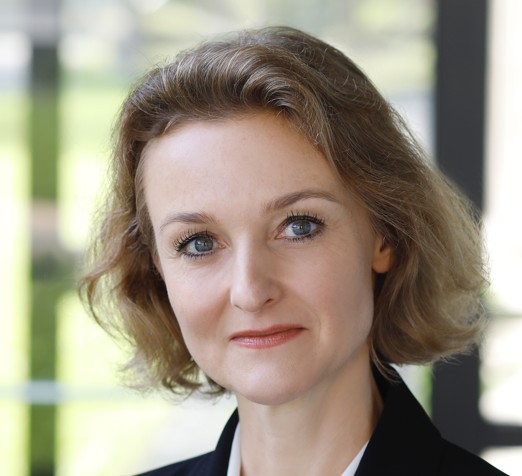
Heidrun Stöger
Professor of School Pedagogy, University of Regensburg (Germany)
Unlocking Potential: How Mentoring and Networking Drive Girls’ Engagement in STEM
Despite decades of initiatives to promote gender equity in STEM, the underrepresentation of girls and women remains a persistent global issue. Research shows that mentoring and structured networking can play a transformative role in addressing this gap—offering guidance, role models, and long-term support that shape educational and career trajectories.
This keynote explores how digital mentoring and online communities can foster sustained STEM engagement among girls. Drawing on findings from large-scale, longitudinal research—including evidence from CyberMentor, Germany’s most extensive online STEM mentoring program for girls—this talk illustrates how structured mentor-mentee relationships and digitally facilitated peer interactions contribute to increased self-efficacy, stronger STEM identity, and career intentions. Crucially, these changes are shown to influence actual study and career choices in STEM.
The presentation highlights the mechanisms that make mentoring effective: authentic role modeling, accessible communication, and digital communities and projects that enable ongoing STEM-related exchange. Particular emphasis is placed on how the quality and frequency of interaction – both with mentors and within peer networks – shape developmental outcomes. The integration of online mentoring with in-person, hands-on STEM experiences (as in hybrid models such as CyberMentor Plus) emerges as a promising direction for increasing impact.
By synthesizing empirical insights and practical strategies, this keynote offers evidence-based guidance for educators, policymakers, and program designers seeking to build inclusive, scalable frameworks for engaging the next generation of women in STEM. It makes the case for mentoring and network-building not as add-ons, but as core components of effective STEM education and equity efforts.